
MOSFET Solutions for Synchronous Rectification
Low-resistance MOSFETs replace rectifier diodes to reduce conduction loss in low-voltage, high-current converter outputs.

How Synchronous MOSFETs Reduce Power Loss
The controller turns each MOSFET on only when current should flow in that direction. Accurate timing creates a low-resistance current path while preventing reverse current and cross-conduction.
During dead-time, current can flow through the body diode, so consider its conduction loss and reverse-recovery behavior alongside channel RDS(on). Match gate charge to the driver capability and switching frequency; verify timing, reverse-current risk, safe operating area and thermal limits using the controller and device datasheets.
Converter Output
Switched energy arrives from a transformer or inductor at the secondary stage.
Timing & Gate Control
The controller aligns gate signals with the correct current direction.
Synchronous MOSFETs
MOSFETs provide a low-loss path during each rectification interval.
Low-Loss DC Output
Filtering delivers stable DC with less heat than a conventional diode path.
MOSFET Options for Synchronous Rectification
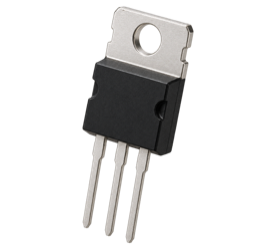
Low-Voltage MOSFETs
A broader selection path for output voltage, current, package and thermal requirements.
What to Share for Device Matching
Share the converter topology, output requirements, switching frequency, timing method, package preference and thermal limits. Technical documents are available upon request.